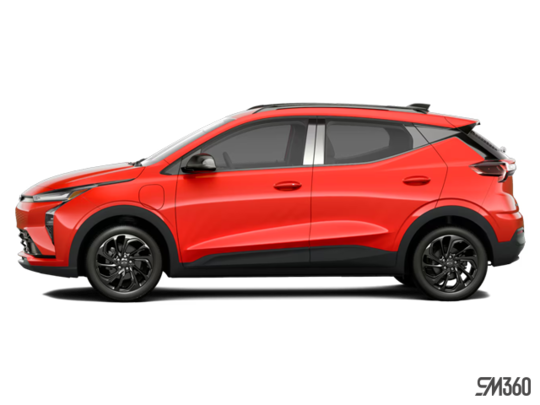
Chevrolet Bolt LT vs. Nissan Leaf S: 5 Specs to Check Before You Choose Your First 2027 EV
September 18 2026,
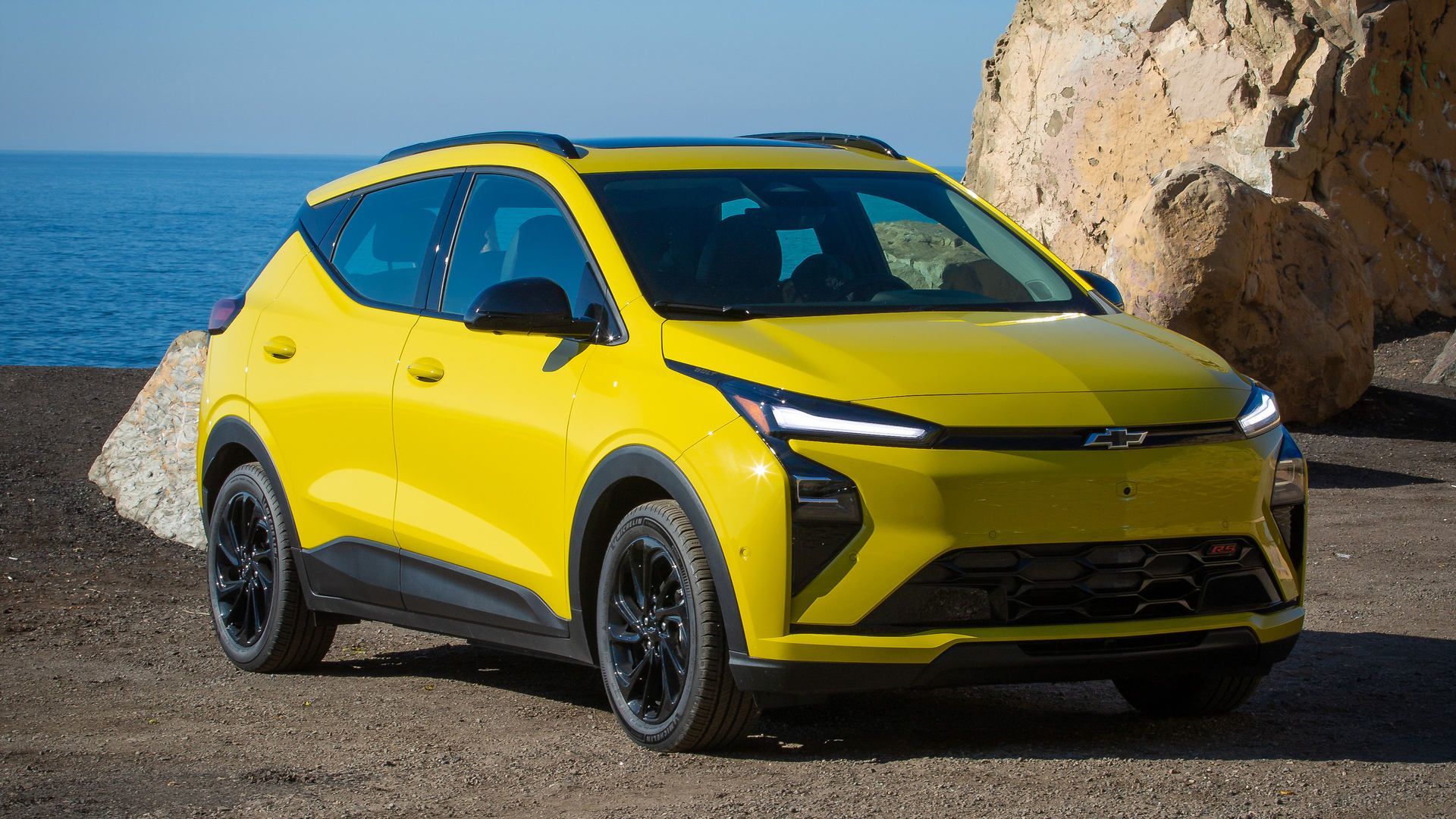
Shopping for a first electric car gets confusing fast, because every model is described with the same handful of words. Affordable. Efficient. Easy to live with. The 2027 Chevrolet Bolt LT and the 2027 Nissan Leaf S both fit that description, and both land in the same price neighbourhood once government programs are applied.
Five specifications separate them, and each one changes something you will notice in the first month of ownership. Here is what to check, in the order that matters, before signing anything.
Spec 1: Range on a Full Charge
The Bolt LT carries an estimated 422 km of range. The Leaf S is rated at 341 km. The 81 km gap is close to two full days of driving for the average Canadian, who covers roughly 50 km a day.
That difference shows up as frequency rather than drama. A driver covering 350 km a week plugs the Bolt LT in about once every eight days. The same week in a Leaf S means charging every six. Over a year, that is roughly a dozen extra charging sessions.
Spec 2: Battery Size
Range comes from the battery, and the Bolt LT carries a 65 kWh pack against 53 kWh in the Leaf S. Chevrolet uses lithium iron phosphate cells in a prismatic can format, a chemistry known for tolerating frequent charging well.
Battery coverage runs 8 years or 160,000 km on the Bolt, whichever comes first. For a first-time EV buyer, that warranty term is worth reading as carefully as the range figure, because it is the part of the car with the longest financial tail.
Spec 3: Charging Speed at Home and on the Road
This is the spec most first-time buyers skip, and the one with the biggest daily impact. Charging speed has two halves, and the Bolt LT leads both.
- Level 2 at home: 11.5 kW onboard charger on the Bolt LT against 7.2 kW on the Leaf S. At 11.5 kW, the Bolt adds roughly 64 km of range per hour.
- DC fast charging: the Bolt LT accepts up to 150 kW and runs from 10% to 80% in 26 minutes. The Leaf S takes 35 minutes.
- Connector: the 2027 Bolt is the first Chevrolet built with a native NACS charging port, so it connects to NACS fast chargers without an adapter.
The Gouvernement du Québec estimates $300 to $400 a year in added home electricity for a fully electric vehicle driven 20,000 km, with a road-trip fast charge landing between $15 and $30.
Spec 4: Power and Everyday Drivability
The Bolt LT produces 210 hp and 169 lb-ft of torque from a single front-mounted permanent magnet motor. The Leaf S produces 174 hp. That 36 hp margin does its best work in the situations a compact EV actually faces, such as merging onto a busy on-ramp or pulling into a gap in city traffic.
A blended regenerative braking system feeds energy back to the battery under braking, with or without One-Pedal Driving engaged. The 11.5 m turning circle and 4,307 mm overall length keep the Bolt easy to place in tight urban parking.
Spec 5: The Price You Actually Pay

The Leaf S opens at $34,998 MSRP against $39,999 for the Bolt LT. The sticker gap closes quickly once the programs are applied.
- $4,200 Chevrolet non-stackable cash rebate on the Bolt LT, against $0 on the Leaf S
- $5,000 from the federal Electric Vehicle Affordability Program (EVAP) on the 2027 Bolt LT
- $2,000 from Quebec’s Roulez vert program for a fully electric vehicle registered in 2026
Stacked together, that is $11,200 applied against the Bolt LT, bringing its all-in starting figure to $33,899 against $31,851 for the Leaf S. Roughly $2,000 separates them. Worth noting on timing: Roulez vert assistance falls to $0 for vehicles registered in 2027 and the program ends December 31, 2026, with the registration date as the trigger rather than the order date or a deposit.
The Five Specs Side by Side
|
Spec |
Bolt LT |
Leaf S |
|
Estimated range |
422 km |
341 km |
|
Battery capacity |
65 kWh |
53 kWh |
|
DC fast charge, 10% to 80% |
26 min |
35 min |
|
Level 2 onboard charger |
11.5 kW |
7.2 kW |
|
Horsepower |
210 hp |
174 hp |
The Bolt LT leads all five, and it adds equipment the Leaf S base trim does not offer, including a standard heated steering wheel, heated front seats, an 11.3-inch touchscreen with Google built-in, an 11-inch driver information centre, Adaptive Cruise Control and Chevy Safety Assist. Cargo space favours the Bolt as well, at 1,594 L with the rear seat folded against 1,572 L.
Run the five checks in order and the pattern holds. The Bolt LT goes farther, stores more energy, refills faster in both directions, pulls harder and lands within about $2,000 of the lowest all-in price in the segment. For a first EV, spending a little more once to charge faster every week is the trade that pays back.
See the Numbers for Yourself at Mont-Royal Chevrolet
Bring this five-spec checklist to Mont-Royal Chevrolet in Montreal and put it to the team. They can review EVAP and Roulez vert eligibility with you, map the 2027 Bolt LT’s charging speed against your home setup, and arrange a drive so you can judge the last spec that never fits on a chart.