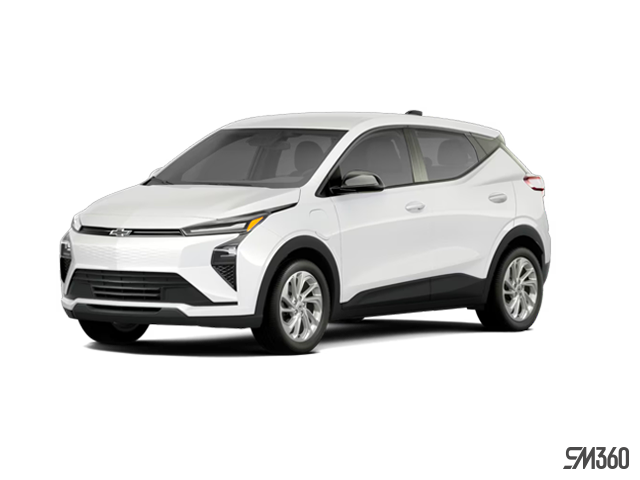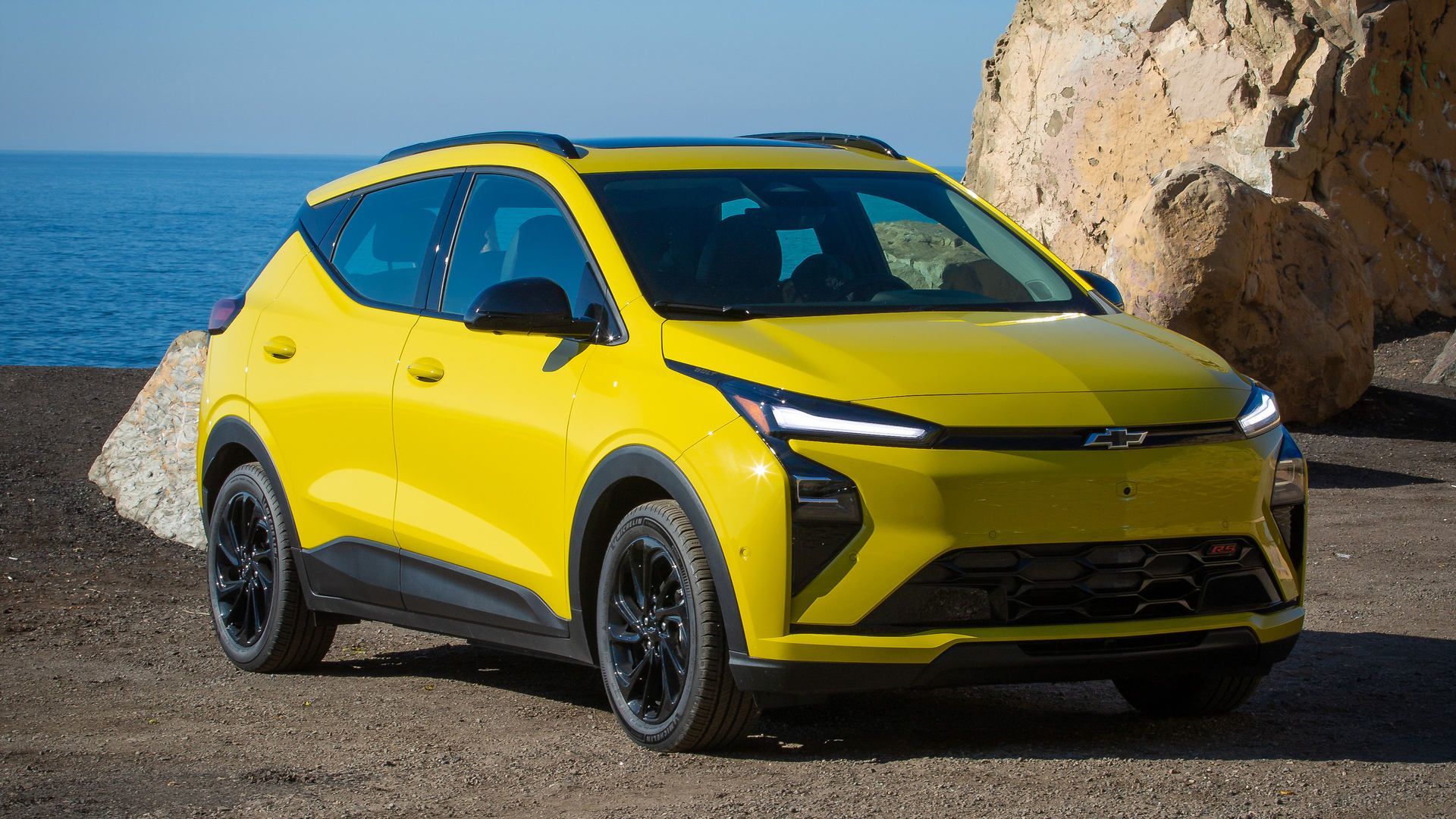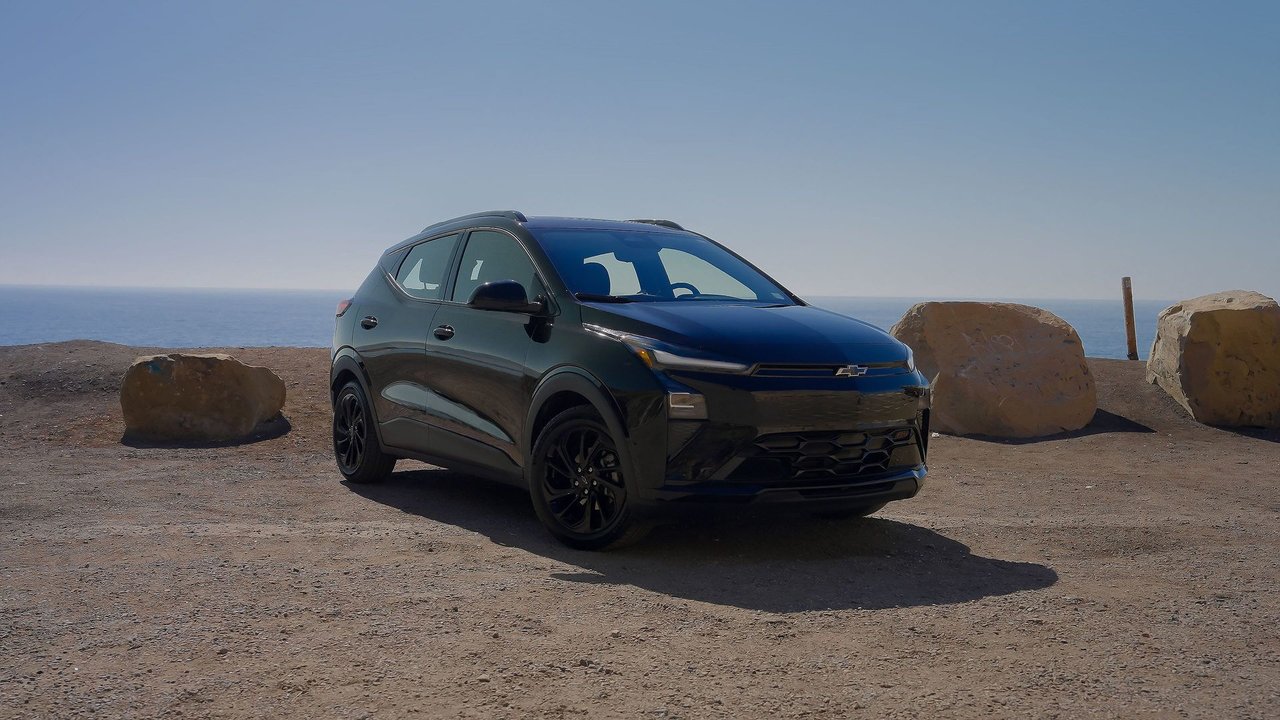
Most Bolt owners will not plug in at a public fast charger every week. They will plug in at home, overnight or for an hour after work, and wonder how much range that actually buys back. For Quebec drivers weighing a Bolt against a gas commuter car, that hour matters more than a headline range number.
This article breaks down what a single hour on a home Level 2 charger contributes to the 2027 Bolt, how that differs from a fast-charging stop, and what kind of home setup makes sense depending on where you live.
What Home Charging Actually Looks Like on the Bolt

The 2027 Bolt comes with an 11.5 kW capable onboard charging module, standard on both the LT and RS trims. That module governs how quickly the car can accept power from a Level 2 home charger, regardless of what plug or station you use.
Every Bolt also includes a dual level charge cord as standard equipment. It uses a NACS vehicle connector, and its attachment plugs can be changed to suit either a standard 120-volt three-prong household outlet or a 240-volt NEMA 14-50 outlet, giving owners a Level 1 or Level 2 option straight out of the box.
The charging port itself is NACS, Tesla’s connector standard that GM has adopted across its EV lineup. That matters for home equipment shopping: any home charger you buy needs to be NACS-native, or paired with the right adapter, to plug directly into the Bolt without extra hardware.
How Home AC Charging Differs From DC Fast Charging
Home charging and public fast charging are not the same tool for the same job. At home, the Bolt draws alternating current (AC) through its onboard charger, capped at 11.5 kW. On the road, a DC fast charger bypasses that onboard limiter and feeds the battery directly, up to 150 kW.
That difference shows up starkly in charging time. A 10 percent to 80 percent DC fast-charging session takes about 25 minutes. An equivalent AC session at home, on the same battery, takes hours rather than minutes.
Here is the practical split:
|
Charging type |
Power delivered |
Typical use |
|
Level 1 (120V outlet) |
Trickle rate |
Overnight top-up, light daily driving |
|
Level 2 (240V, home) |
Up to 11.5 kW |
Overnight or several-hour home charging |
|
DC fast charging |
Up to 150 kW |
Road trips, quick public top-ups |
An hour of Level 2 home charging is not a full-charge scenario, and it is not meant to be. It is a top-up. The 65 kWh Lithium Iron Phosphate battery takes several hours from empty on a home Level 2 charger; one hour restores a slice of that, not the whole tank.
What an Hour Actually Buys You
The Bolt is rated for up to 421.6 km of electric range from its 65 kWh battery. Dividing the two gives a rough sense of the car’s own efficiency, and applying that ratio to an hour of 11.5 kW charging suggests somewhere in the range of 60 to 75 additional kilometres, depending on how much energy actually reaches the battery.
That is a practical estimate, not a guarantee. The distance an hour of charging adds depends on the battery’s starting state of charge, the actual output the charger and home circuit can sustain, and cold-weather conditions, which reduce both charging efficiency and driving range in a Quebec winter.
For most daily patterns, that estimate is enough to matter. A school run, a grocery trip, and a commute rarely add up to 60 or more kilometres in a single day for most drivers. An hour plugged in after arriving home can often replace exactly what the day already used.
Why This Matters for Everyday Quebec Driving
The value of an hour at home is not about eliminating public charging. It is about never needing it for routine driving. Someone who commutes, drops off kids, and runs errands within a normal daily radius can treat the Bolt’s home charging as a nightly reset rather than an event.
A longer overnight session, rather than a single hour, makes more sense after a longer day, a weekend trip, or in colder weather when range drops and the battery needs more energy to reach the same point. The hour is a baseline; overnight charging is the buffer for bigger days.
The Bolt’s 11.3-inch touchscreen with Google built-in supports real-time navigation, which helps with trip planning when a drive will exceed a typical home-charging top-up. The 11-inch Driver Information Centre also displays battery status directly, so checking how much charge an hour actually added takes seconds, not guesswork.
Who Gets the Most Out of Home Charging

House owners with a dedicated parking spot are the simplest case. A hardwired Level 2 charger, like the optional GM PowerUp 2, delivers up to 11.5 kW and requires professional installation, since it is not something to wire into an existing outlet without an electrician confirming the home’s electrical capacity can support it.
Condo and apartment owners face a different equation. Home charging in that setting depends on whether the building has installed shared or dedicated EV charging infrastructure, since an individual owner cannot always add a hardwired 240-volt line without building approval.
A basic 120-volt outlet, using the same dual-level cord, still works as a Level 1 fallback for slower overnight charging where a dedicated Level 2 station is not available. It is a real option, just a much slower one, better suited to drivers with lighter daily distances.
The Bolt is built around this kind of urban and suburban ownership. It is not positioned as a long-distance charging case study; it is a car meant to live on a home charger most nights, with DC fast charging available for the occasional longer trip.
Planning Your Bolt’s Home Charging Setup
The 2027 Bolt pairs a standard 11.5 kW onboard charger with a NACS port and an included dual-level charge cord, giving most owners a workable home charging path from day one. How much an hour adds depends on your charger, your starting charge, and the season, but for routine Quebec driving, it is often enough.
Visit Mont-Royal Chevrolet in Montréal to talk through home charging setup options for the 2027 Bolt and see how it fits your daily routine before it arrives at Chevrolet dealerships.